The Nights When Fear Fell Silent
What war taught me about danger, control, and the calm that comes when choice disappears.
I had checked the dulled night-mode screen of my work phone to see that it was around 3:30. The drones had been coming later in the night mostly, closer to the early hours of the morning. This hour was what I’d been used to last year. The quiet Ukrainian voice on the tannoy told me politely that the air raid sirens in Kyiv had been activated, and I should proceed to the shelter in the basement of the hotel if I wanted to. My first instinct is always to look out the window when the sirens sound; to see if I can hear the drones and the gunfire. On the nights of heavier attacks you normally can, though from the fifth floor of central Kyiv it’s hard to see over the tops of the other buildings, and beyond the broad boulevards that stretch between them below, gasping for the traffic culled by the curfew and martial law. I couldn’t hear anything else though. Just the sirens listlessly echoing through the streets. Like most of the rest of the city these days, I went back to bed and shut my eyes. I fell asleep almost instantly.
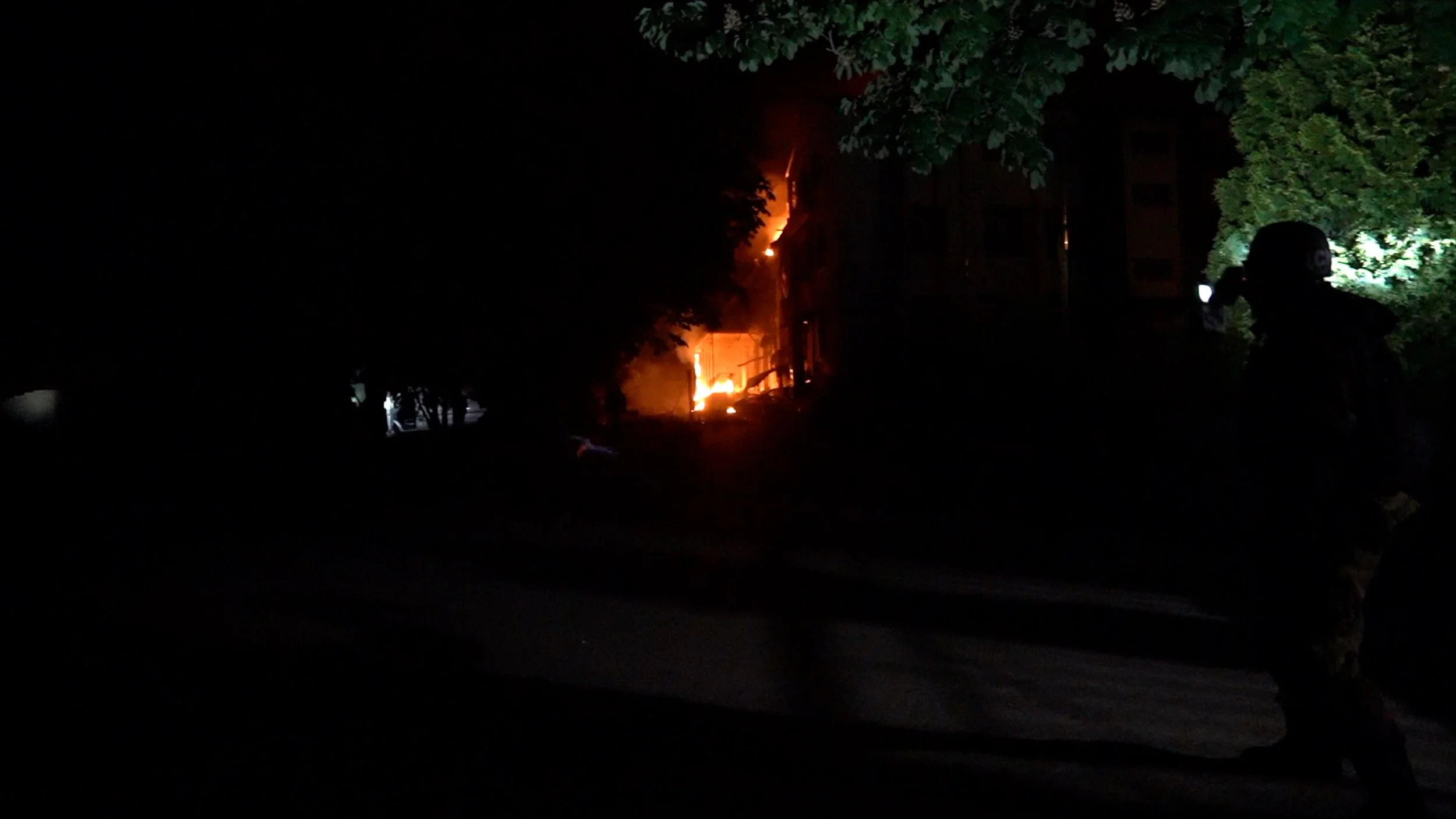
Dnipro, after a drone strike. The first blast had already hit, before any sirens sounded. A rescue worker shines a torch.
I don’t remember the first time I heard an air raid siren. I remember the first time I heard a long range drone. Shaheds have small engines the size of a moped, and cheap, wooden propellers that cut the air slowly, more like a buzz than a hum. It fills the air with a pathetic malice. But you don’t know where it is. They almost always come at night. It was more than a year after I started coming to Ukraine I heard one coming towards me.
We’d been in Dnipro, close enough to get to the frontline but not so close you were in striking distance of the shorter range weaponry that punctuates the rhythm of the days further east. We’d sat outside, around midnight, basking in the warmth of late spring and the exchanging of conflict stories with one another. We heard the buzz, and we listened. It grew louder, plodding towards us, almost reluctantly - compelled by something it had no control over. We started filming, long before we heard any air raid sirens. It grew louder. We waited. It grew louder still. Then we heard the Doppler moan as the engine passed us by. It couldn’t have been more than a few hundred metres away. It began to fall, and we didn’t know where it was. The engine cut, then there was silence for a few moments. Then the explosion. Still there were no sirens.
We ran out of the apartment - myself, my fixer Dima and my cameraman Nart - so quickly that Nart had forgotten to put his shoes on. But we weren’t running away. Nart was still filming. We paced through the winding back streets of the affable district we’d been staying in, trying to talk to the handful of half-dressed locals now out on the streets. There was no screaming, only a single dog barking. Everyone seemed calm, but curious; resigned to the question of who or what had lost the lottery that particular evening. The silent blue lights and the orange painted by the fire in the sky made it clear where the drone had hit. The emergency workers too were calm in their movements and the volume of their voices, talking deliberately. But I knew there was a part of them that would be on edge. Often drones and missiles come in pairs; the first to draw attention and to kill, the second to target those that come to help. Then we heard the second drone. Still there were no sirens.
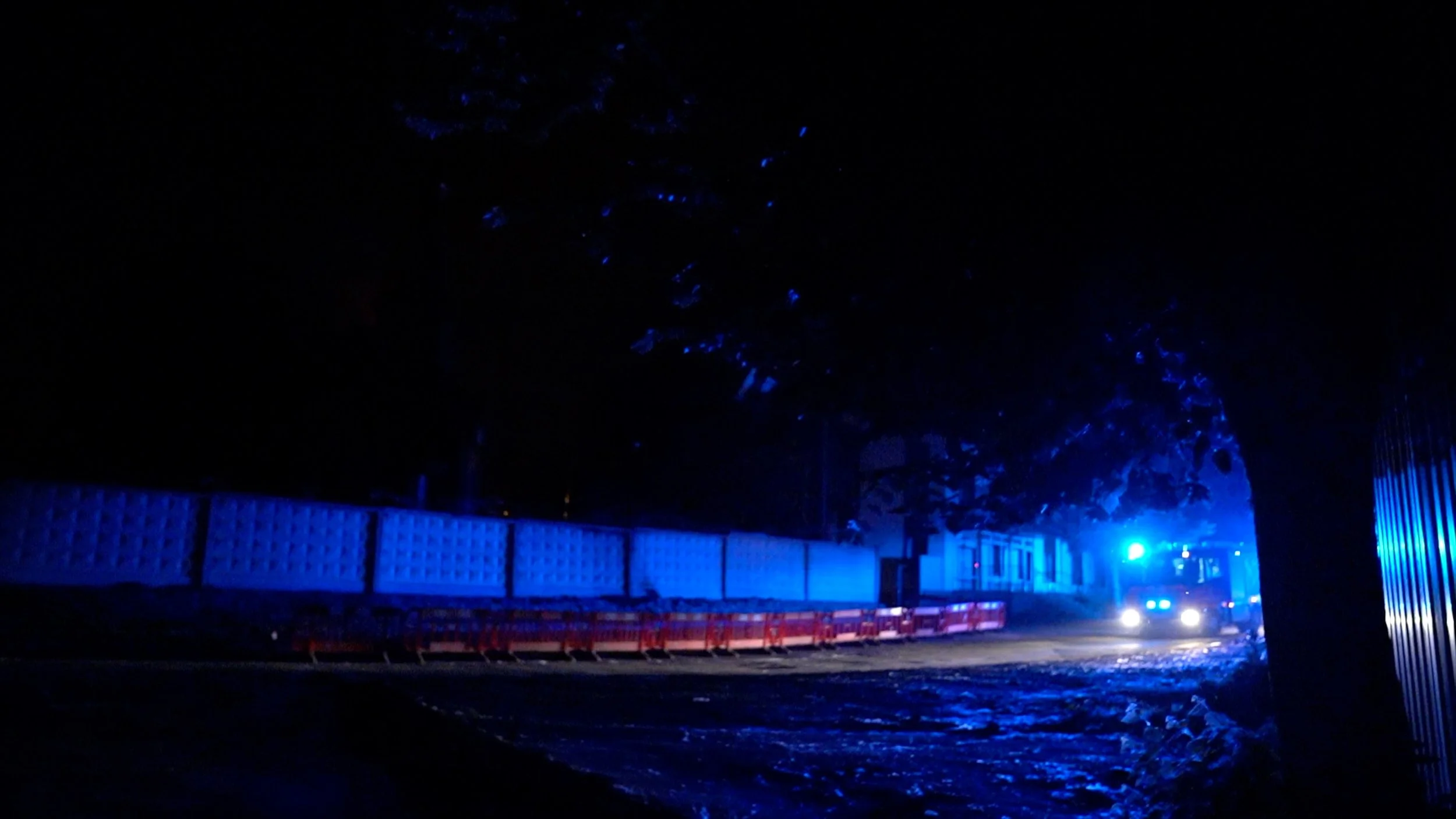
Emergency lights cutting through the darkness moments before the second drone hit.
I’d taken cover in long grass next to the road. I didn’t cover my head. I was near a wall that may have offered some cover, and a tree that almost certainly wouldn’t. As I thought about my situation, I realised I didn’t feel scared. I had no control over the situation. The drone yawned its way past us, struggling to stay in the sky. I didn’t know where it was. I waited for the explosion. It didn’t come. Then it did. I’d been comfortable in the grass, but pushed myself up to my feet with my hands. I smiled at the young couple I’d laid down next to, unable to think of what else to do. I might have said good evening - one of the few Ukrainian phrases I know. They sniggered, almost ironically, like they knew I had the luxury of leaving. Their laughter seemed to come from somewhere shallow inside them - out of familiarity and practiced gallows humour. I was surprised to find my response was the same - an accident of the smirk that said I understood. I felt no sense of relief - no wave crashing over me of adrenaline, letting my body know it had been a close call, or that I had put myself in danger. It was the second time in as many weeks that had happened.
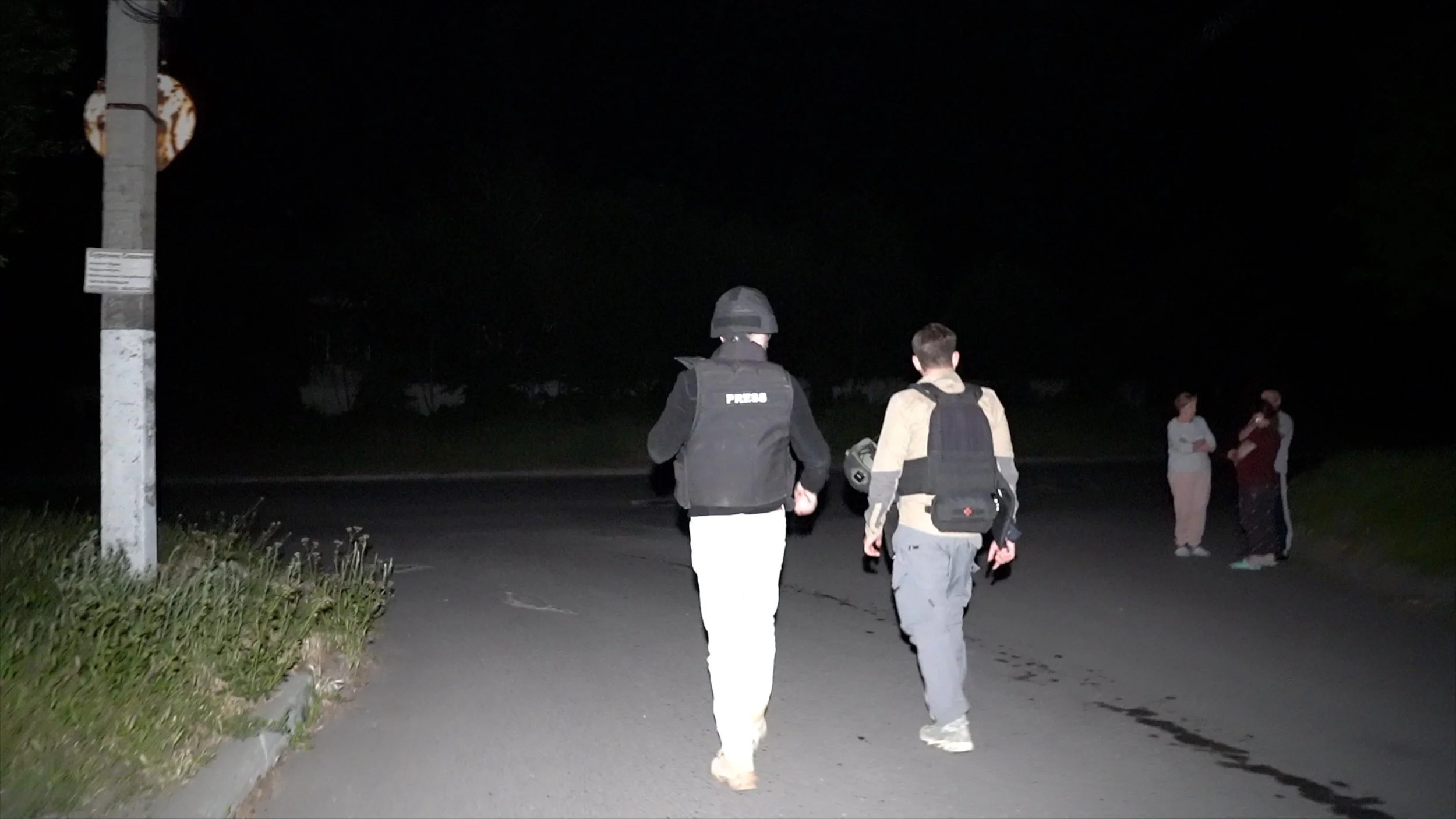
Residents stepping out to see what the drones left behind.
The days beforehand had felt more like hours, and stretched back to when we’d been in Donetsk. Here, the first person view drones - FPVs - patrol the hundreds of kilometres of the frontline; a chorus of insects watching everything that moves, picking and choosing what to feast on. Ten kilometres outside Pokrovsk, we’d wanted to verify whether Russia was going to adhere to its own proposed ceasefire. We’d had to wait for an hour until midnight, so we could say whether the heartbeat of artillery was still being pumped across enemy lines. As we watched and listened, perched between a road and the bushes that furnished a shallow ditch, we heard the quadcopters begin to sing. We hid in a concrete bus stop, covered on three sides and by a roof, and we listened to the song. It occurred to me that could be the last thing we heard.
I remember looking around inside the bus stop for where I could possibly hide were the drones to come around the corner and find us. At night they use thermal cameras. There was nowhere. I considered my options, where I could hide. Behind the others? I realised it didn’t matter. I was no longer in control of the situation. I had made my decisions and they had put me there in that place, where chance was now in charge of my fate. I thought about whether I’d said everything I’d wanted to say to my family, to my kids, and what might happen after I was gone. I didn’t want to die, but I didn’t have any regrets either. I didn’t stand there wishing I had made different decisions. It’s only thinking back on it now, in London, months later, do I feel the fear that didn’t come to me then. It would have served no purpose to have it at the time. There was nothing I could do.
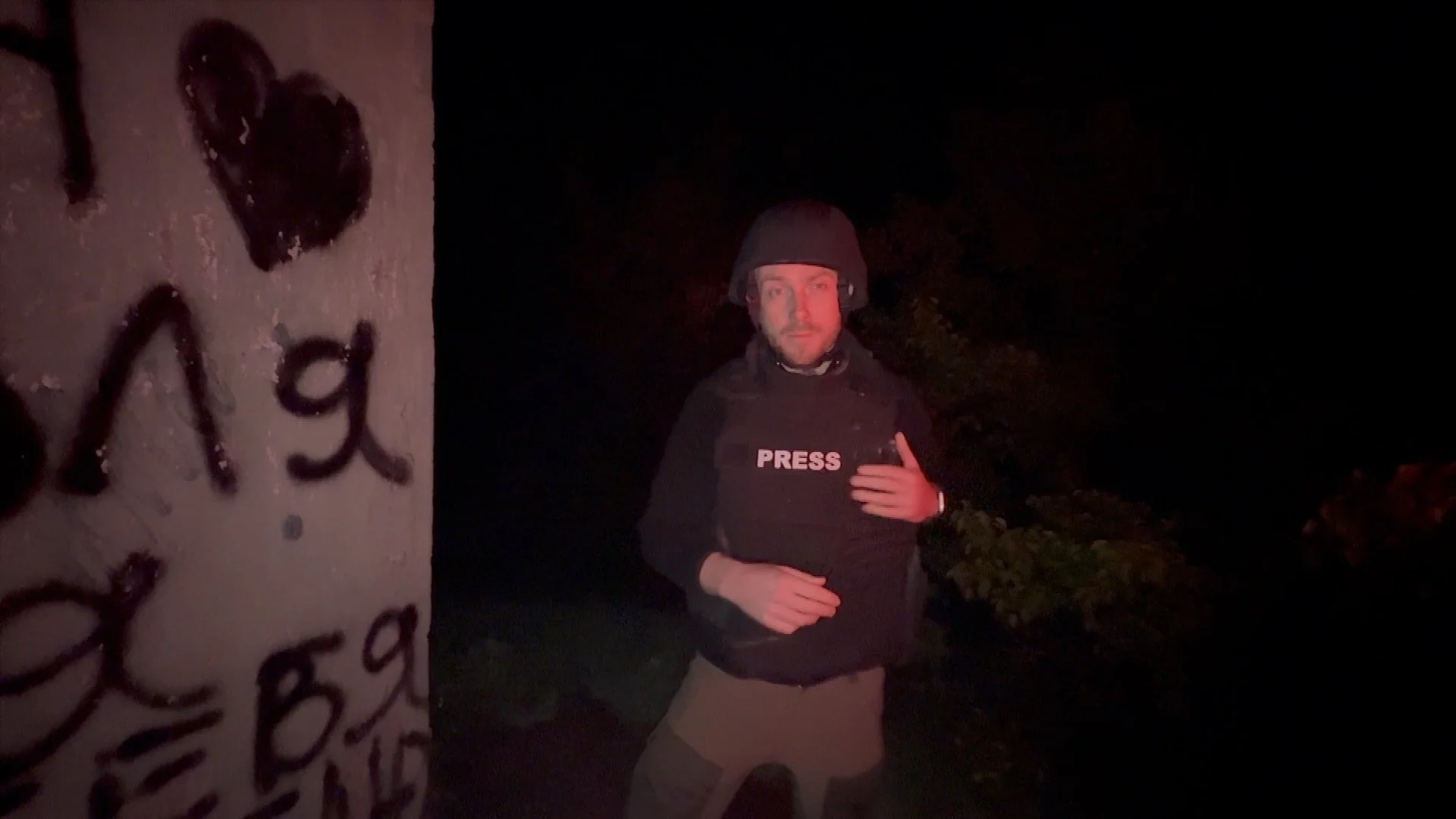
Near Pokrovsk, twenty minutes after hiding from an FPV drone in the graffitied bus stop.
Indeed it is London where I feel more fear. In Kyiv there is the abstract possibility of drone strikes - unseen, unmanned, unfeeling. In London it is the people. I pound the streets from West Ealing station to my home aggressively, almost like a march, watching everyone and feeling everyone else watching me. I keep my phone in my pocket, and sometimes cross the road twice to see who will follow. I look over my shoulder, through the yellow of the street lights and keep myself ready to run or react. The music is quietened in my headphones, and the gaze reaches beyond the metres in front of me round the corners I can’t quite see yet. It is a heightened level of awareness that can only come from fear, and it’s ever present after dark here - more so since someone was murdered in a mugging two streets from my home earlier this year. Fear, here, serves a purpose. Here, I have control, and I use it every chance I can.
