What comes after survival? The other war waiting for Ukraine
Ukraine’s cemeteries are already crowded with flags and flowers. But what about those who lived? What about the scars that can’t be seen? What is this war costing its survivors?
We’d followed him into a large building. Grey, rundown, unmarked - the sort you’d recognise all over eastern Europe and former Soviet countries. It might have been a warehouse or a factory at some point, but there was little sign now of whatever its purpose once was. It smelt of damp and dust. In another city, you might expect to find needles or squatters inside.
We were going to meet international athletes.
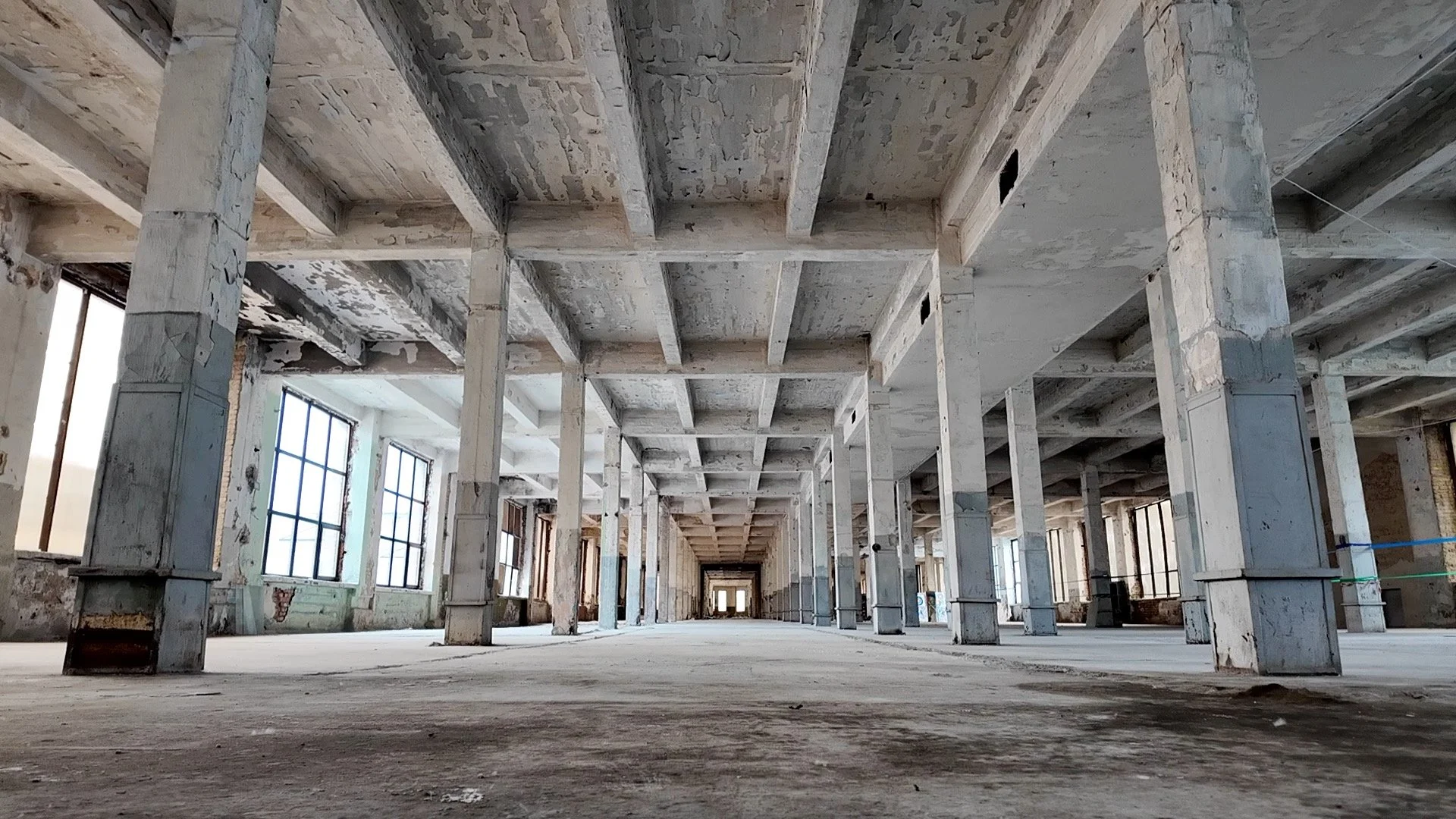
Inside an almost abandoned industrial building near Kyiv. The concrete columns and peeling paint were not where I expected to find international athletes.
As we walked past rusting gates, and things that may have once been in a children’s nursery, dull thuds echoed through the halls. Our guide walked slowly but deliberately, talking to my fixer Dima, cheerfully in Ukrainian. Up the stairs, a long hallway that could have housed a hundred desks was dotted by a handful of targets pinned on boards, pockmarked and heavily used. Volodymyr then gestured towards a well lit area off to the side, and said he’d immediately get his bow out.
We’d met Volodymyr Tokvis only an hour earlier, at a conference on mental health. His scar was hard to ignore. It wrapped round his head from under his right eye, over his ear and through the middle of his scalp. It was well healed but wrought, betraying the violence behind it. It had been six years since he was shot in the face by a Russian sniper. The scar had healed. He was still healing.
Official figures are hard to fact check, but estimates put the number of Ukrainian soldiers killed or injured since February 2022 at 50,000-100,000. Volodymyr was shot in 2019. Most in this country say the war started in 2014, likely putting the real number of casualties significantly higher. Across Ukraine, cemeteries stand tall with flags and flowers. But there is growing concern here about those that aren’t killed by the conflict - and about what survival really means.
Volodymyr plucked his bow from the rack proudly, fixing his wrist guard and quiver to himself, clearly going through motions he’d done countless times before. As he strode towards the end of the range, fixing the target in place, I asked him if he’d fired arrows before he was shot. “Never.”
We watched as he then raised the bow, aiming with one eye. Then he drew the string back with his teeth, and fired. He hasn’t been able to use his left arm fully since he was shot.
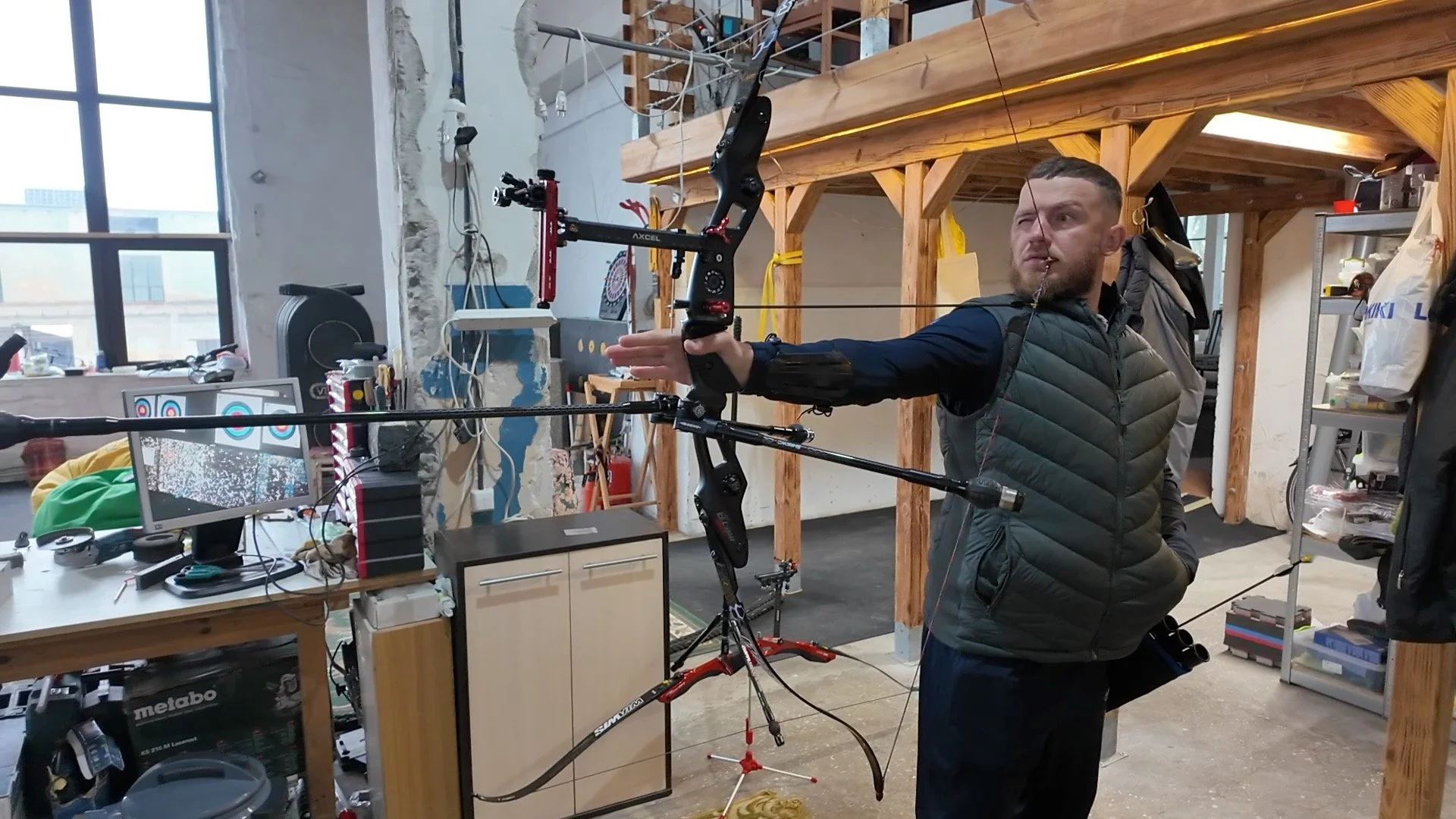
Ukrainian veteran Volodymyr Tokvis draws his compound bow indoors during target archery practice in Kyiv. I’d never seen someone use their teeth to fire an arrow before.
“You need concentration. You think about the arrow, about the target, the shot, and about your stance. You don’t think about anything else that can distract you.”
It had taken some time for Volodymyr to be able to do this. He’d originally joined the military in 2008, and moved around between units for the next 10 years. In 2019, during an exercise in Donetsk, he’d been using thermal goggles at night to monitor Russian positions along the border. “They give off a thermal image themselves,” he said. “They saw the light on me.”
He’s since spent most of the last six years in hospital. At first it was the operations, and then the recovery. Therapy - physical, and mental.
“When you’re in the hospital, you’re helpless. You’re fed, taken to the toilet, washed in the shower. Then you start to walk a little. After six months, I could start to lift my arm as high as my chin. That was one of the happiest moments. Then, there’s what goes on in your head.”
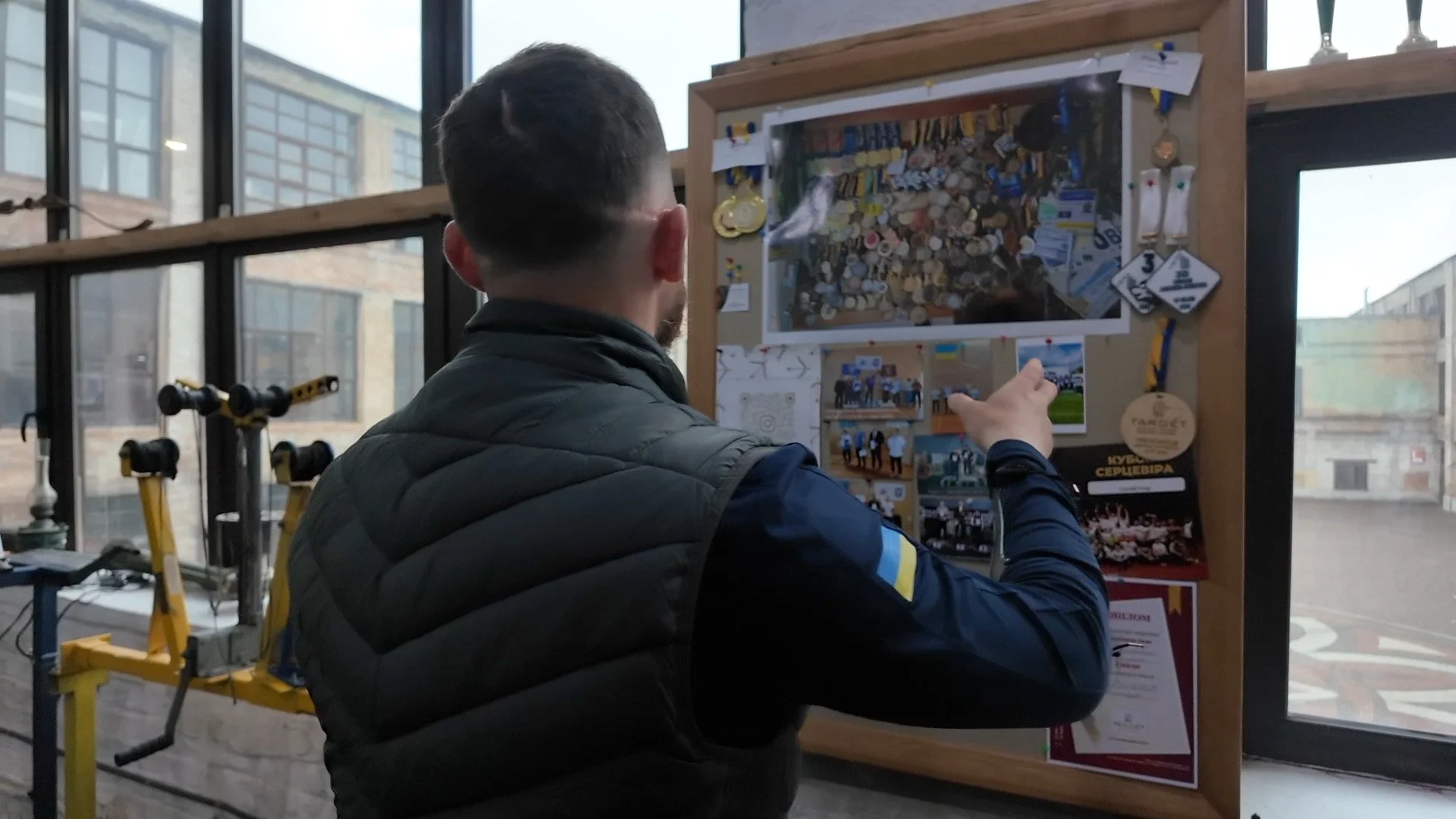
Volodymyr looks at his medals and competition photographs at the range, the scar the wraps around his head clearly visible
“People are used to seeing veterans with injuries - without arms, without legs. When they see me, they think I’m almost whole. But the scar is not always visible. If you don’t see me from behind, you can’t see mine. In general, everything’s fine, but this was the most difficult period for me psychologically.”
As he talked to us, Volodymyr’s gaze trailed off me - through me, and beyond, as if he was looking back into the past. I asked him about what had gone through his mind while he was in hospital.
“I told my wife that I was going to jump out of the window, but I couldn’t walk. I was lucky anyway. I was on the first floor of the hospital, and there were nets on the window. A lot of people don’t have nets.”
Earlier, at the mental health conference, half a dozen academics and doctors had stood up to talk about their work in the field and how it was changing. The language was clinical but loaded - removed from the violence of the war, but heavy with its implications. The audience, we were told, had doubled since last year.
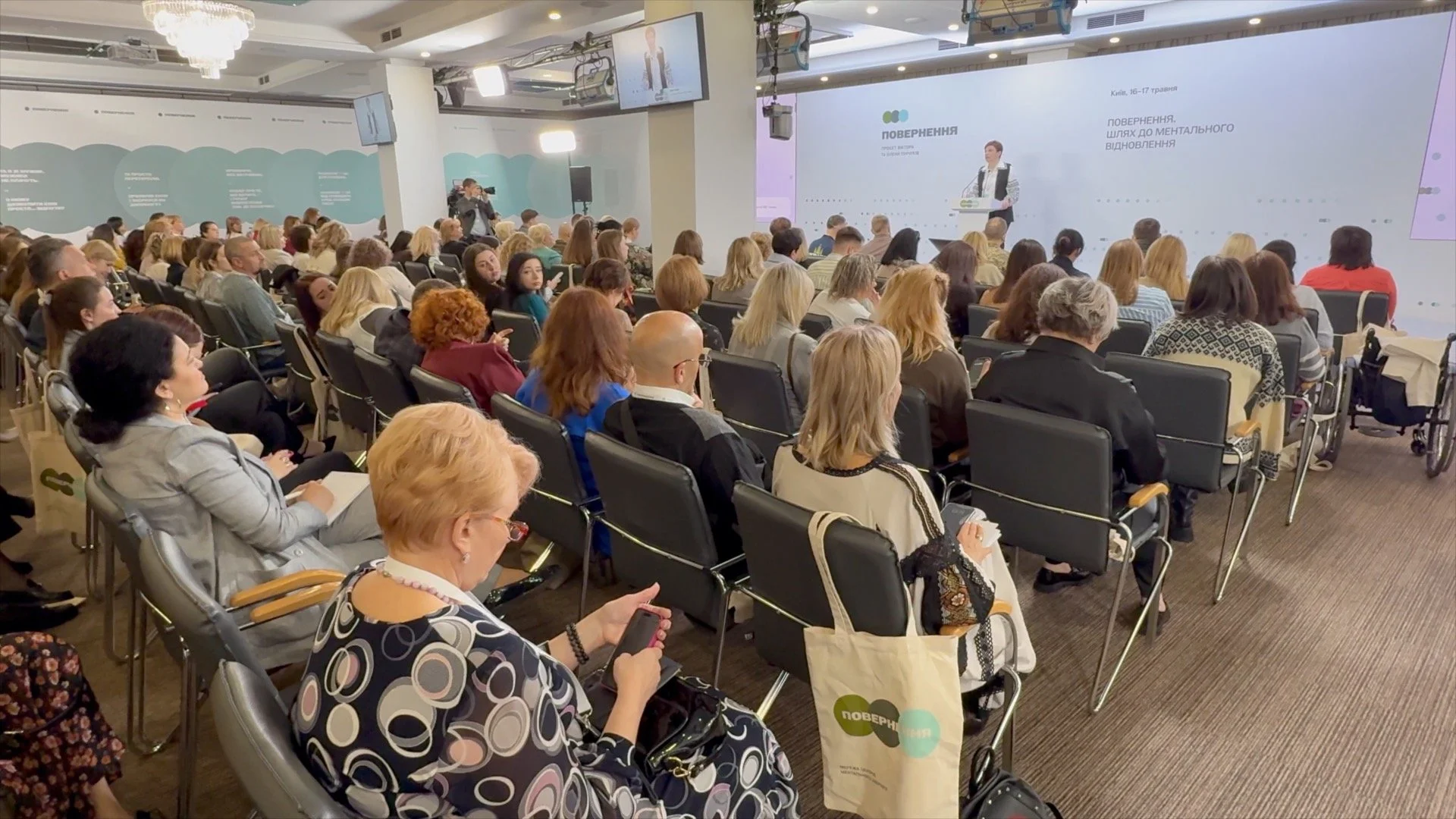
Audience seated in rows at a mental health conference in Kyiv, listening to a speaker at the podium. These conferences have been growing, and so are the warnings about the looming mental health crisis in the country
Svitlana Grytsenko is one of those heading up projects to help soldiers returning from the frontline - a project called RECOVERY. Her outlook was sobering.
“After the war, this will be the biggest challenge. For those who have become veterans because of the wounds, or those who will hopefully at some point in this war. When people go home, it will be a huge challenge.”
I asked her if Ukraine was ready for that challenge.
“We’re not ready at all, and the sector is already huge. Sometimes we say that every Ukrainian is a patient now, because almost everybody needs support, but it’s going to be millions, not hundreds of thousands. Our health system is not ready for it. No countries would be.”
How long will it take to deal with these effects?
“A generation, maybe two. I don’t know.”
After Volodymyr had fired his arrows, we walked with him down the range, to collect them from the target. Most had hit the centre. “I want to go to the Paralympics in 2028,” he told us. The medals on the wall nearby suggest he might.
Ukraine is still fighting for its survival. It is hard to find people in this country that don’t believe in victory. But many are still grappling with what it means to survive.
Until the conflict is over, it is hard to look beyond it. For now, most will concentrate on what’s in front of them. There is another fight waiting for them whatever happens. Winning that one may be impossible.
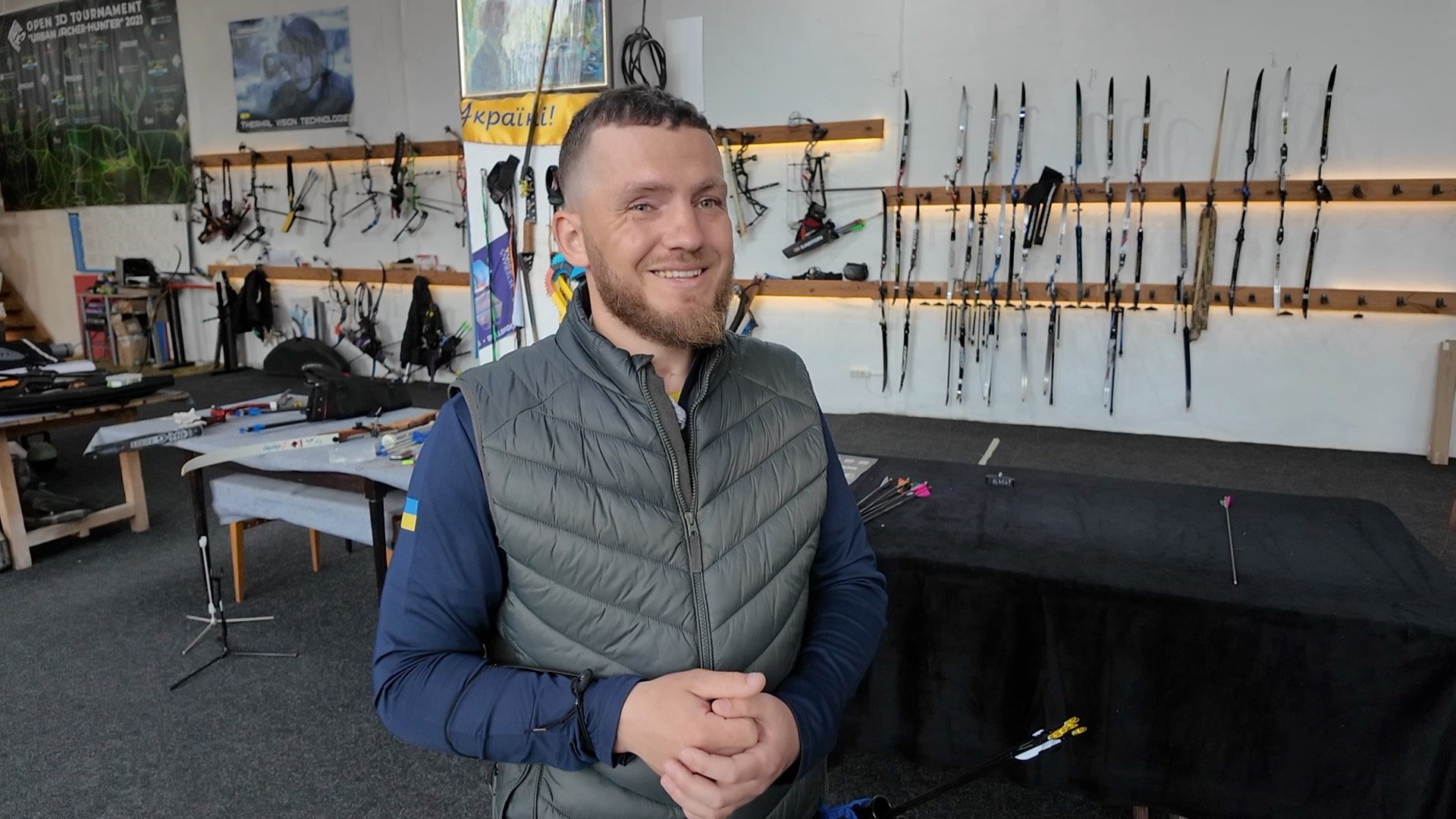
Ukrainian veteran Volodymyr Tokvis near the bows used at his archery range Kyiv, smiling after being asked about his hopes for the future
